
Keynote Presentation Schedule
Wednesday, |
|
Thursday, |
|
Friday, |
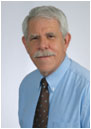
Keith Cambron
President and CEO, AT&T Labs Inc.
Austin, USA
Title:
Technologies that Matter, Convergence or Conspiracy? 
Brief Abstract:
Global networks are shaped by the changing nature of the traffic they carry. Those changes are driven by a combination of advances in technology, new applications, and shifting trends in how consumers choose to communicate. As network engineers and scientists, we can often identify key technologies as they emerge. When we are able to harness them to unify and extend the reach and effectiveness of the networks we have built, we use the term convergence to describe the trend. But often emerging technologies, applications and consumers create trends that we did not anticipate and did not prepare for in our design and scaling of our networks. At times, it seems these technologies have conspired to create demands on our networks that challenge our ability to adapt and respond. In this talk we'll examine key technology trends that have the potential to converge or conspire, and examine how we can prepare for the unexpected.
Short Bio:
Keith Cambron is President & CEO of AT&T Labs, Inc., AT&T's applied research, engineering and development subsidiary. He has a broad range of experience in telecommunications networks, technology and design, ranging from circuit board and software design to the implementation of large public voice, data and video networks. Before the 2005 merger with AT&T, he served as President & CEO of SBC Laboratories, Inc. Keith began his career in telecommunications at Bell Telephone Laboratories in 1977.
Keith has been profiled in Telephony and America's Network, and was named by CRN Magazine as one of the top 25 technology thought leaders in 2010. He is a Senior Member of the Institute of Electrical and Electronics Engineers (IEEE) and he received Telephony Magazine’s Network Design and Implementation Award for Fiber in the Loop in 1995. He has published articles in the Bell Communications Research Exchange and IEEE Communications Magazine, and received the 2007 IEEE ComSoc CQR Chairman’s Award from the Technical Committee on Communications Quality & Reliability (CQR) for sustained contributions in the field of network reliability, technology introduction, and leadership in the research and development of telecommunications systems. He holds seven patents for the design of telecommunications software and systems.
Keith received his B.S.E.E. from the University of Missouri, M.S. in Systems Management from the University of Southern California. He is a retired Commander in the United States Naval Reserve.
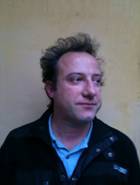
Carlo Alberto Licciardi
Telecom Italia - Strategies and Innovation
Research Manager
Title:
Challenges for Context awareness in heterogeneous social networking environment
Brief Abstract:
In the last two years we have seen a tremendous increase of Social Neworking services (Facebook has overcome 500 million subscribers) and of user generated multimedia content (YouTube, Flickr, …). On the other hand new Smartphones (such as Apple iPhone) have driven an dramatic increase of mobile internet. People are getting more and more always connect also when moving around.
Although the usability of new mobile devices is almost perfect, we have still to cope with some limitation on the screen size and on mobile bandwidth.
Being almost always connected is increasing day by day the interaction of users in social netork and the content that they must consume.
A critical issue is the protection from information overload. The big question is: How can I actually read what I am interested in?
Therefore it is getting more and more important to have real-time systems that adapt and filter information that is proposed to the users in mobility. Pieces of information must be properly tagged and categorized in order to be properly filtered, in addition the content must be deliverd to the user at the right moment in the right place (depending on her/his context).
Some main scientific challenges must be addressed: how to handle efficiently and in a scalable context aware systems, how to elaborate context in order to make it useful for application (application are not interested in signal strength of cellular network or wifi, but in location, movement, user activity), how can I make recommender systems scalable for million of users on terabytes of contents, how to profile users in order to ensure the better user experience. The talk will address these issues and the impact on the research and industrial community.
Short Bio:
Carlo Alberto Licciardi (carlo.licciardi@telecomitalia.it) is Research Manager at Telecom Italia (Strategies and Innovation division). He joined Telecom Italia Lab (formerly CSELT - Torino, Italy, leader company in research and development for Telecommunication)) in 1992 where he has worked in long term aspects of Intelligent Network and in the design of software architecture for the provisioning of Advanced Telecommunication Services. He has contributed to standardization activities (ITU-T, 3GPP, JAINSLEE and OMA) and to worldwide research projects (IST, TINA-C and EURESCOM). He has been project leader of several European projects on evolution of TELCO Service Layer. He is currently steering board member in EU projects dealing with Context Awareness and Social Networking: CCAST (Context aware content casting), MUSIC (Middleware for context aware adaptation).
He is currently leading internal research project in Telecom Italia in the area of “Mobile social communities enablers and Context Awareness”, dealing with the delivery of seamless Mobile communities context aware services which support advance content (User generated content tagging in a Web 2.0 fashion) and communication services for mobile and fixed Telecom Italia customer.
His current research interest is in definition of context representation languages and context management platform, user profiling and advanced service adaptation for mobile and desktop customers. He is author of several scientific papers in the area of service creation, application server for next generation networks and context awareness.
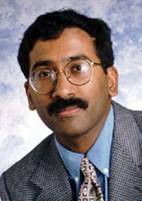
A. L. Narasimha Reddy
Professor Dept. of Elec. and Comp. Eng.
Texas A&M University, USA
Title:
Changing Ecology of Congestion Control protocols
Brief Abstract:
For a long time, TCP remained dominant transport protocol in the Internet. While changes have been made to TCP over the years, the basic principles of AIMD congestion control governed TCP's operation. Recently, many proposals for new congestion control protocols have proliferated. Many of these protocols are driven by the need to operate over longer delay links, larger bandwidth links or to tolerate channel errors.
I will describe some of the prominent protocols that have been put forward and discuss the ramifications of expanding diversity of protocols on each other and the networks they operate in.
Short Bio:
Narasimha Reddy is currently a J. W. Runyon Professor in the department of Electrical
Engineering at Texas A & M University. Reddy's research interests are in
Computer Networks, Multimedia Systems, Storage systems, and Computer Architecture. During 1990-1995, he was a Research Staff Member at IBM Almaden Research
Center in San Jose.
Reddy received a B.Tech. degree in Electronics and Electrical Communications Engineering from the Indian Institute of Technology, Kharagpur, India, in August 1985, and the M.S. and Ph.D degrees in Computer Engineering from the University of Illinois at Urbana-Champaign in May 1987 and August 1990 respectively.
Reddy holds five patents and was awarded a technical accomplishment award while at IBM. He has received an NSF Career Award in 1996. He was a faculty fellow of the College of Engineering at Texas A&M during 1999-2000. His honors include an outstanding professor award by the IEEE student branch at Texas A&M during 1997-1998, an outstanding faculty award by the department of Electrical and Computer Engineering during 2003-2004, a Distinguished Achievement award for teaching from the former students association of Texas A&M University and a citation "for one of the most influential papers from the 1st ACM Multimedia conference". Reddy is a Fellow of IEEE Computer Society and is a member of ACM.
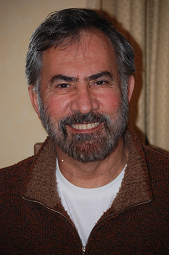
Siamak Khorram, Ph.D.
Professor and Founding Director
Center for Earth Observation
North Carolina State University, USA
Title:
The Information Technology with a Focus on Geospatial Information Science: Past, Present, and Future Trends
Brief Abstract:
A brief history of the Information Technology including personal computers, the internet, the web, the globalization, the dot com bubble, the fiber optics, and the telecom deregulations along with the future trends will be discussed. The focus of the talk, however, will be on the Geospatial Information Science and Technology. In this context the past, current, and future trends will be explored. This will include the conventional acquisition of imagery from space since in 1960s on. These Earth Observation satellite data acquisition worldwide by a number of countries including the U.S., France, Canada, Japan, India, Russia and others will also be discussed. Image acquisition in many parts of the electromagnetic spectrum such as visible, infrared, and radar along with the spatial, spectral, radiometric, and temporal resolutions of satellite data will be explained. Brief remarks will be given on the advances in image processing techniques that are coupled with advances in computer and electronics technologies that in turn have led into the applications of remotely sensed data at local, regional global scale. In summary, we will address the current and future trends in satellite data acquisition, processing, and applications along with the roles information and communication technologies are playing in these current and future trends. A variety of satellite imagery and their applications will be demonstrated.
Short Bio:
Professor Khorram received a MS. in Engineering and another MS in Ecology from the University of California (UC) at Davis. He received a Ph.D. under a joint program from the University of California at Berkeley and Davis with emphasis in Remote Sensing and Image processing.
From 1976 to 1980, he served as the Principal Scientist at the Space Sciences Laboratory at the University of California in Berkeley. He joined the faculty in North Carolina State University (NCSU) in 1980. At NCSU, and he has served as the Principal Investigator for well over 60 major research projects. His research projects have focused on remote sensing, image processing, and information technology.
In 1982, he established the Computer Graphics Center at NCSU as a university-wide officially recognized center involved in research and training in spatial information technology and special purpose computing. In 1997, he changed the name of the Computer Graphics Center to the Center for Earth Observation (CEO) with the same mission. In 1986 and 87, he served as a NASA-ASEE Fellow at NASA Ames Research Center and as a summer faculty at Stanford University, California.
Since 1988, he has concurrently served as a faculty member at the International Space University (ISU). Dr. Khorram has worked with over 250 educators and world-renowned experts from 30 countries and has participated in educating about 3,000 multidisciplinary graduate students from 67 countries worldwide.
In 1995 and 96, he served as the first Dean and Vice President for Academic Programs at ISU in Strasbourg, France. In this capacity, he was responsible for the development and delivery of all academic programs and supervision of the faculty, the academic staff, and Program Directors. In this capacity, he played a major role in establishing academic relationships between ISU and major space organizations such as European, French, Japanese, Russian, German, and Austrian, and Indian Space Agencies. Subsequent to his position as the Dean, Dr. Khorram served as the Principal Advisor to the President in 96 and as the Chair of the Academic Council and Chair of the ISU’s 23 Affiliates Campuses Network worldwide. He currently serves as a member of the University’s Board of Trustees.
He holds two patents (pending final approval) in Data Fusion techniques as applied to imagery from various payloads and platforms. He has served as the Major Professor for over 30 Ph.D. and MS students. He is the author of over 200 publications in peer-reviewed journals, conference proceedings, and major technical reports. He is a member of several professional and scientific societies.
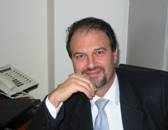
Franco Prampolini
IBM Italy Telco IBDT Executive
Manager of Telco Industry Business for IBM Italy
Title:
The next 5 years scenario of Telco Industry
Brief Abstract:
In the next years the current high competitive environment will lead to extreme competition on existing market segments. New players and new technologies will change the market of telco operators opening it to new business models and to new revenue streams such as Machine-to-Machine ("the internet of the things"), Information Technology and Digital Advertising. Most disruptive threats will be rooted in a culture of innovation and experimentation. Customers will take center stage becoming the decisive and customer experience will be the key driver of business. In this scenario, there will be focus on seamless and cross platform interaction, while personalization and analytics will play a key role in marketing strategy and investment prioritization. Access decided in favour of LTE for mobile broadband but business case and Regulatory uncertainty remain a challenge. The key elements of the service innovation agenda will be seamless and ubiquitous access, digital lifestyle enablement and vertical industry applications. Time-to-market and increasing financial pressure will require the transformation of business processes to allow the rapid and efficient definition and deployment of new offering in a multichannel scenario. Cost will keep being a challenge.Short-term priorities will be the need to Accelerate NGN migration; process automation/ standardization and IT Infrastructure optimization and data center consolidation. In the long term the key points of attention will be Network Infrastructure Sharing, Evolving IT Infrastructure through dynamic and cloud architectures, and leveraging global delivery skills for IT and Back Office functions.
Short Bio:
In 2006 he was assigned to the IBM international team that worked on the mega deal between IBM and Vodafone on the outsourcing of application development and management (AD&M) for all Vodafone Business Support Systems. In 2008 he took the responsibility of the IBM organization that delivers AD&m service to Vodafone in Italy.
In January 2005 he became part of the EMEA Leadership Board of IBM Business Consulting Services (IBM BCS), as EMEA Application Innovation Services (AIS) Leader. He led the application business of IBM BCS, including areas such as Application Development, Business Integration, Portals, Content&Knowledge Management, Wireless, Open Source, Security, e-learning.
From October 2002 till December 2004 I had been the EMEA South Region AIS Executive), accountable for the AIS business in South Europe. He led the development of a very innovative value proposition of AIS that was defined starting from business processes analysis and exploiting innovative technology solutions to support business process reengineering and transformation also leveraging know-how and solutions from IBM Research.
From 1999 until 2002 he had been working as General Manager of IBM Semea Sud, an IBM affiliate fully owned by IBM, funded in 1992 to develop research activities on areas such as networked multimedia, object oriented, parallel computing; He focused the mission and the activities on e-business.
From 1997 to 1998 he has been the e-business Services Leader for Italy, Greece, Turkey and Israel. He contributed to the generation of IBM e-business value proposition working with IBM Research Labs and Strategy teams.
In 1995 he was appointed Manager of Interactive Business Services Centre (Rome), part of the new IBM Systems Integration division. He was part of the IBM team that realized the Digital Video Broadcasting Service Centre for Stream, a company of STET group.
In 1986 he joined IBM Rome Scientific Centre, where he had been working as researcher on distributed archives and networked multimedia and in 1994 he was appointed Manager of IBM Cagliari Research Centre. He addressed the mission of the centre on networked application and broadband network.
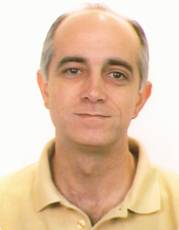
Jose Duato
Full Professor
Dept. de Ingeniería de Sistemas y Computadores
Universidad Politécnica de Valencia, Spain
Title:
Beyond the Power and Memory Walls: The Role of NoCs in Future System Architectures
(This keynote has not been given due to an accident of the speaker)
Brief Abstract:
Although most research on NoCs has assumed the use of regular topologies like 2D meshes, some current trends in chip architecture, combined with expected technology limitations and usage models, will very likely oblige designers to consider less regular topologies to provide the best cost-performance trade-off. Moreover, the set of nodes interconnected by those NoCs will also be heterogeneous, including computational cores of different sizes and computing power, cache blocks and local stores, accelerators of different kinds, and memory controllers. The memory wall problem will likely be addressed by using 3D integration, which will increase heterogeneity significantly, due to the need for locating the hottest cores in the top layer.
Therefore, in order to deliver the best cost-performance trade-off while minimizing resource and power consumption and providing the maximum flexibility, heterogeneity needs appropriate hardware support in the NoC. This talk motivates the need for efficiently supporting heterogeneity, and sketches some results along this direction, describing power-efficient routing algorithms that provide support for multiple heterogeneous, possibly overlapping regions (e.g. virtual machines, coherence domains) in the presence of faulty components. The talk also shows how a hierarchical interconnect (on-chip, on-substrate) can significantly shorten design cost and time to market.
Short Bio:
Jose Duato received the MS and PhD degrees in electrical engineering from the Universidad Politécnica de Valencia, Spain, in 1981 and 1985, respectively. Currently, Dr. Duato is Professor in the Department of Computer Engineering (DISCA) at the same university. He was also an adjunct professor in the Department of Computer and Information Science, The Ohio State University.
His current research interests include interconnection networks and multiprocessor architectures. Prof. Duato has published over 400 refereed papers. He proposed a powerful theory of deadlock-free adaptive routing for wormhole networks. Versions of this theory have been used in the design of the routing algorithms for the MIT Reliable Router, the Cray T3E supercomputer, the on-chip router of the Alpha 21364 microprocessor, and the IBM BlueGene/L supercomputer. Prof. Duato also developed RECN, the only truly scalable congestion management technique proposed to date, and a very efficient routing algorithm for fat trees that has been incorporated into Sun Microsystem's 3456-port InfiniBand Magnum switch. Currently, Prof. Duato leads the Advanced Technology Group in the HyperTransport Consortium, whose main result to date has been the development and standardization of an extension to HyperTransport (High Node Count HyperTransport Specification 1.0) that extends the device addressing capabilities of HyperTransport in several orders of magnitude.
Prof. Duato is the first author of the book "Interconnection Networks: An Engineering Approach". Dr. Duato served as a member of the editorial boards of IEEE Transactions on Parallel and Distributed Systems, IEEE Transactions on Computers, and IEEE Computer Architecture Letters. He has been the General Co-Chair for the 2001 International Conference on Parallel Processing, the Program Committee Chair for the Tenth International Symposium on High Performance Computer Architecture (HPCA-10), and the Program Co-Chair for the 2005 International Conference on Parallel Processing. Also, he served as Co-Chair, member of the Steering Committee, Vice-Chair, or member of the Program Committee in more than 60 conferences, including the most prestigious conferences in his area (HPCA, ISCA, IPPS/SPDP, IPDPS, ICPP, ICDCS, Europar, HiPC).